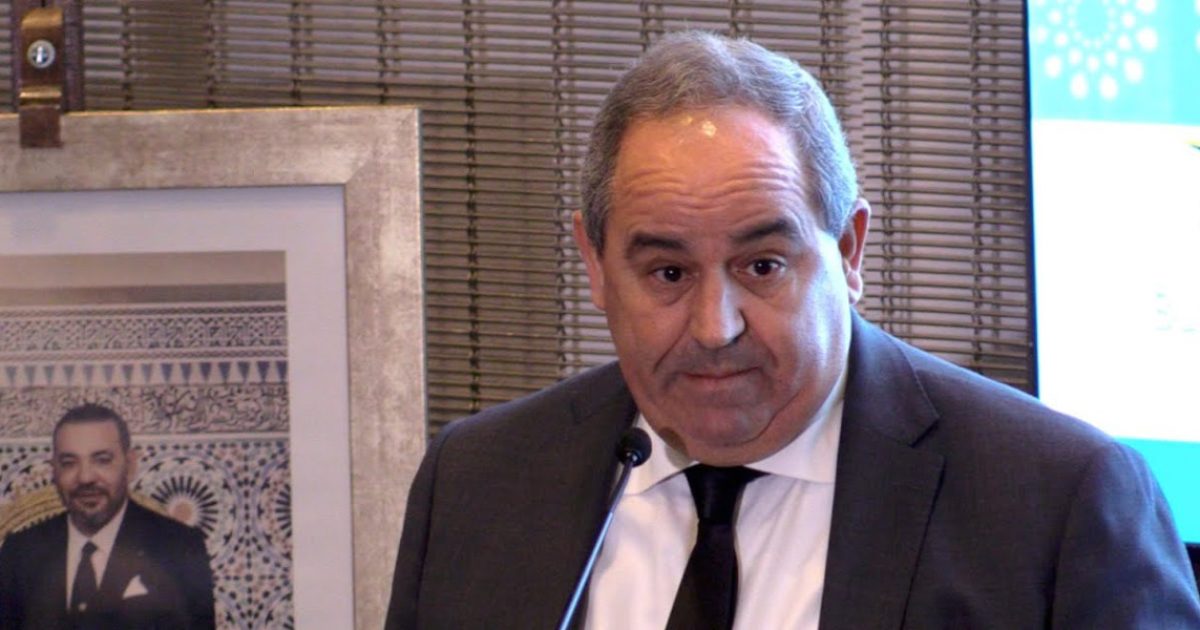
The Moroccan Minister of Higher Education, Research and Innovation, Azzedine El Midaoui, announced on 07/04/2025 the launch of the Pnardi (National Program to Support Research, Development and Innovation).
“The Moroccan national program to support research, development and innovation is based on several targeted calls for projects, open to universities, research centers, start-ups, and companies,” says Ghislaine El Abid, a doctoral student at the Population and Development Center of the IRD (Research Institute for Development), interviewed by the Africa office of News Tank on 29/05/2025. It funds collaborative projects around key themes.
The plan was unveiled at a ceremony held in Benguerir, on the campus of Mohammed VI Polytechnic University (UM6P).
The initiative has several objectives:
- to train a new generation of Moroccan scientists;
- to advance Moroccan research in sectors with high innovation potential, such as food sovereignty, climate change, and renewable energy;
- and to facilitate the transition of Moroccan scientific projects from the laboratory to the market.
The National Program for Research and Innovation in Science and Technology (PNARDI) is funded to the tune of one billion dirhams (approximately €95 million), jointly provided by the Ministry of Higher Education, Research and Innovation (MESRI) and the OCP Foundation, the philanthropic arm of the Office Chérifien des Phosphates (OCP) group. UM6P and the National Center for Scientific and Technical Research (CNRS) are also partners in the agreement.
200 million dirhams (€19 million) will be allocated in particular to the mobilization of researchers from the Moroccan diaspora, so that they can contribute, in one way or another, to the improvement of Moroccan scientific excellence.
The Pnardi Sub-Programs
The precise wording of the calls for proposals has not yet been released. However, the Pnardi will be structured around three complementary sub-programs:
- The Young Researchers R&D Program (Ibn Battouta), to support the emergence of new generations of scientists;
- The Priority Thematic R&D Program (Ibn Albanna), targeting strategic areas with high innovation potential;
- The Technology Transfer Program (Nefzaouia), dedicated to strengthening the link between research and economic needs by fostering wealth creation from scientific advances.
Funding will be disbursed in four phases by 2028 for collaborative projects open to the Moroccan scientific community.
Evaluation Mechanisms
The program also includes evaluation and monitoring mechanisms to ensure the smooth implementation of scientific projects under its auspices.
“We can only be delighted that research has been called upon to participate not only in action research but also in evaluation. It’s not simply a matter of distributing grants, but rather of structuring localized innovation ecosystems where each stakeholder has a role to play,” adds Ghislaine El Abid.
“Until recently, research seemed completely disconnected from public and political action in Morocco. The Pnardi program will make it possible to identify the problems encountered in the country and develop the skills needed to address them,” the researcher continues.
According to Ghislaine El Abid, the program will allow the country to assess the effectiveness of its scientific work. “There is a desire to strengthen the link between Moroccan science and the country’s development. This program will allow Morocco to better position itself globally by stimulating research in high-potential fields and mobilizing its diaspora,” according to the scientist.
In addition to the Ministry of Higher Education, Research and Innovation (MESRI) and the National Center for Scientific and Technical Research (CNRST), the main partners are the University of Mohammed VI (UM6P) and the Office of Petroleum, Catering and Development (OCP). These two organizations are already heavily involved in applied research, and the National Program for Research and Innovation in Applied Sciences (PNARDI) is an opportunity to strengthen their role in the national ecosystem. UM6P is expected to leverage its infrastructure, human capital, and numerous international partnerships to structure high-value-added projects.
“I see this first phase as a pilot project that could be extended to other Moroccan universities throughout the country,” concludes Ghislaine El Abid.
This article, produced by Afriscitech, was published by NewsTank Education & Research on June 16, 2025. It is reproduced with the kind permission of NewsTank.