Mohamed VI Polytechnic University, created in 2013 in Benguerir, near Marrakesh, also has campuses in France, Canada, and Côte d’Ivoire
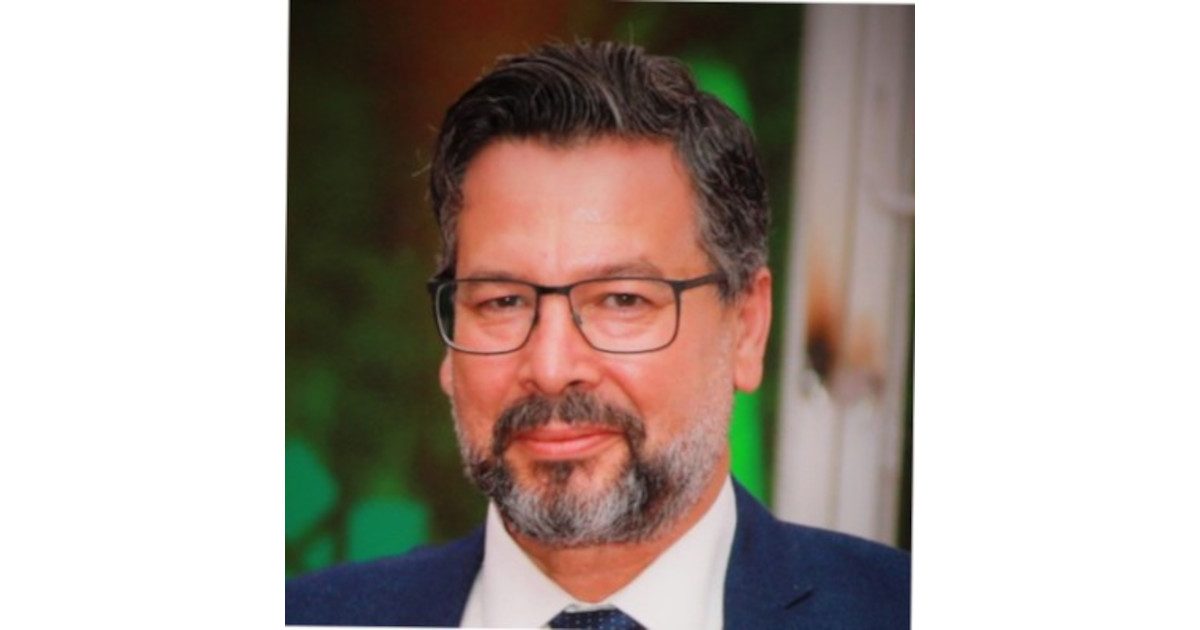
“UM6P positions itself as an academic and scientific platform for conducting research contextualized to Africa,”, said Jones Alami, director of research at Mohammed VI Polytechnic University, to News Tank on June 23, 2025.
Inaugurated in 2017, the university has 7,000 students and 348 tenured faculty members. It also has several branches abroad, notably in France, Canada, and Côte d’Ivoire. These branches “facilitate the establishment of structured relationships with international academic and scientific ecosystems”.
UM6P’s second objective is “to attract and engage the Moroccan and African diaspora, which has a strong presence in Europe and North America”.
Finally, the institution seeks to attract international scientists. 15% of its researchers are from abroad. “We primarily have collaborations in the field of scientific research, but we are also open to academic collaborations,” says the director of research, noting that the institution participates in the Erasmus+ program.
Why was UM6P created?
UM6P is an institution created to meet the research and innovation needs of Morocco and Africa. In Morocco, universities are primarily focused on education, with research taking a back seat, whereas UM6P is first and foremost a research university. We have a clear vision, a precise roadmap, and specific objectives. However, we also place great importance on education, as we believe it is essential to train highly qualified students to strengthen our scientific capabilities. The third pillar of UM6P is entrepreneurship: this involves taking research from the theoretical stage to the laboratory, and then to the industrial stage.
What roles do the French, Canadian, and Ivorian branches of UM6P play?
We actively collaborate and communicate with the French and Canadian branches of UM6P. These branches have three objectives: the first is to increase our visibility abroad and to promote our vision and the results of our work. They facilitate the establishment of structured relationships with international academic and scientific ecosystems. The second objective is to attract and engage the Moroccan and African diaspora, which has a strong presence in Europe and North America. Many of them want to develop their research in Morocco, contribute to the country’s global influence, and eventually settle there: completing part of their training at UM6P will make this easier for them. Finally, the third objective is to attract international scientists. Fifteen percent of UM6P’s researchers are international, and we want more non-Moroccans to come and see Morocco as a research hub, where it’s possible to collaborate, or even settle for research.
Have these initiatives helped you secure new partnerships?
Absolutely. They have allowed us to establish research collaborations, as well as to create consortia. For example, I recently had a meeting with the Insa Group (National Institute of Applied Sciences) regarding a joint call for proposals. This meeting was organized through UM6P Paris. These partnerships could be established from Morocco, but when we have a direct presence in other countries, we have a clearer picture of what’s happening there.
What partnerships has UM6P established with other universities and institutions?
We have collaborations with MIT (Massachusetts Institute of Technology), with Stanford University, with the University of Waterloo in Canada, and with several universities in France, Germany, Sweden, and the United Kingdom. In total, we have more than a hundred partnerships with leading universities around the world, with which we organize exchanges of students and academic staff.
Are you looking for new partners?
Absolutely. UM6P positions itself as an academic and scientific platform for conducting research tailored to the African context, with its specific natural, economic, and social conditions. When you look at renewable energy, for example, we have different climates and conditions. For instance, the climate is hot in the deserts of the south, or humid along the coast. These are important conditions for scientists in these fields, and they’ll make it easier for them to find solutions to the challenges in their work. This is an integral part of what we aim to achieve at UM6P.
Are you looking solely for scientific partnerships?
We primarily have collaborations in the field of scientific research, but we’re also open to academic collaborations. We consider education to be just as important as research. For example, we are part of the Erasmus+ program, and we are currently developing smaller-scale, faster exchange programs for our students, as well as opportunities for our faculty to teach and travel abroad. It is also possible to organize joint degree programs. We already have such programs for our master’s and doctoral degrees, but we do not yet have them for bachelor’s degrees—something we are actively working to address.
How can a French university establish a partnership with UM6P?
The easiest way is to contact the Office of Research or the Partnerships Department. If you already have contacts at the university, they can let me know. Next, the usual process begins with an exploratory meeting where we discuss what is and isn’t possible. Finally, if the discussions go well, we can decide to establish a collaboration and negotiate the terms.
This article was published on July 18, 2025, by NewsTank Education and Research, which has kindly authorized its reproduction and translation here.